Clearances in London for homes, flats and businesses
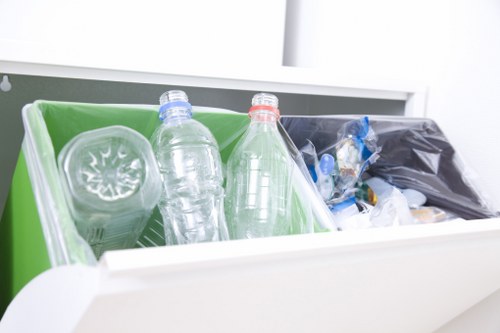
Clearances London provides clearances in London for customers who need unwanted items removed from homes, flats, offices and other premises with as little disruption as possible. The work can range from a single bulky item to a fuller property clearance, and the right approach depends on what is being cleared, how it is stored and how it needs to be handled afterwards. We keep the service practical, straightforward and suited to the item type rather than forcing every job into the same pattern.
Our main service covers everyday domestic and commercial clearances, including furniture, appliances, general rubbish, office contents and wider property clearance work. Some jobs are best handled as a planned visit with a clear list of items, while others need a flexible approach because access is awkward, items are mixed, or different materials need separating. Pricing and quotes are shaped by those factors, so it helps to describe the job clearly from the start. If you are ready to move forward, request a quotation in plain terms and we will take it from there.
We also deal with a number of item-specific removals that benefit from focused handling. For example, mattresses, fridges, sofas and beds all have their own practical considerations, from lifting and access to reuse, recycling or disposal. If you need a service that matches a particular item rather than a general clearance, it is worth choosing the most relevant option so the work can be planned sensibly. For a clearer overview, use the site pages that match your items and then send an enquiry when you are ready.
Domestic clearance work for houses, flats and outbuildings
Domestic clearances often involve a mixture of furniture, bags, boxes and loose household items that need sorting before anything is removed. A careful approach is important because homes may contain fragile pieces, narrow stairways, loft access, shared entrances or objects that need separating for disposal and recycling. We offer household-focused services that suit different property types, including house clearance, flat clearance and home clearance, each of which suits a slightly different setting and level of contents.
When a property contains storage areas or long-ignored rooms, the work often benefits from being divided into sections rather than treated as one oversized task. Loft rooms, garages and sheds can hold a surprising amount of mixed material, and it is usually more efficient to remove items in a considered order so reusable or recyclable pieces are not lost in the general pile. Related services such as loft clearance, garage clearance and property clearance are useful where the building layout or amount of contents calls for a broader clear-out.
For customers arranging domestic work, the key is to think about what should go, what should stay and whether any item needs special handling because of its size, condition or material. That might include furniture that must be taken apart, a fridge that needs careful handling or a mattress that needs a separate disposal route. A clear description of the items helps us decide whether a standard clearance, an item-specific removal or a wider property service is the best fit. When you are ready, ask for a quotation and describe the contents as plainly as you can.
Furniture and bulky item removals
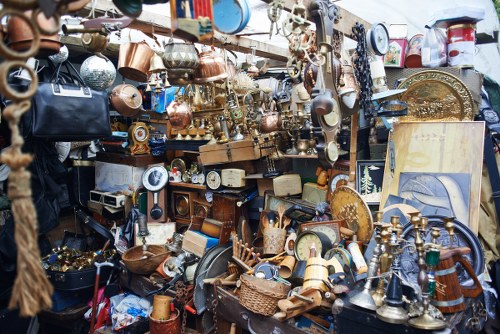
Furniture clearances are usually about more than simple lifting. Sofas, wardrobes, tables, beds and cabinets may need to be carried through tight hallways, moved down stairs or taken apart before removal. We provide furniture clearance, furniture removal and collection and sofa removal and collection for customers who want a practical way to deal with bulky household pieces without treating every item as general waste.
Some furniture is best handled as a single item, while other jobs involve several pieces from one room, an entire property or a combination of old and damaged items. Bulky waste pages such as bulky waste collection and large item collection are helpful where the main challenge is size rather than the number of items. If items are still usable, they may be suitable for onward reuse or recycling, while damaged or broken pieces may be directed towards disposal routes that suit the material.
There is often a sensible middle ground between keeping furniture too long and arranging a clearance too early. If you are replacing one or two major pieces, it can be useful to group the old items together so the removal is efficient and the remaining room contents are easy to protect. Keep a note of any disassembly, restricted access or particularly heavy pieces, because that affects how the work is planned. Clear information saves time later, especially where a bulky item is awkward to move.
Office clearances and commercial premises
Commercial clearances need a tidy, organised process because offices, shops and workspaces often contain a mixed range of items, from desks and chairs to shelving, archive material, packaging and electrical equipment. We handle office clearance and office clearances for workplaces that need contents removed in a way that respects building access, shared areas and the need to keep disruption contained. The work may involve one room, one floor or a larger suite of rooms depending on the premises.
Business clearances can also involve items that are no longer part of day-to-day operations, such as broken fixtures, excess stock, office furniture and obsolete equipment. If the contents are not just office-based, related services including business waste removal, commercial waste collection and commercial waste disposal help customers choose a route that matches the actual material involved. This keeps the enquiry focused and makes it easier to arrange the right handling approach.
For office jobs, it is useful to identify the main categories of items in advance: furniture, electricals, paperwork, mixed waste and anything that needs to stay secure. That allows the work to be prepared in the right order and helps avoid unnecessary delays on the day. If you are clearing an office as part of relocation, refurbishment or a general tidy-out, send a concise list of what is involved and request a quote when you are ready to move ahead.
Specialist removals for appliances, beds and mattresses

Some clearances call for item-specific handling because the objects are awkward, heavy or made from materials that need the right disposal route. We offer fridge disposal, bed disposal, mattress disposal and white goods recycle for customers who need to remove a single item or several related pieces. These services are useful when the main task is not a whole property clearance, but one or more bulky items that cannot simply be left at the kerb or dropped into ordinary household waste.
Fridges and other white goods are often relevant because of their size and internal components, while beds and mattresses can take up a great deal of space despite being difficult to move cleanly through a property. The important point is to match the removal method to the item type. That means considering whether the appliance is intact, whether furniture needs dismantling, and whether the items are to be cleared from a ground-floor property, upper-floor flat or a room with difficult access. Used well, item-specific pages make this much easier to plan.
If you have several of these objects together, you may not need a completely different service for each one, but it is still worth naming them clearly in your enquiry. A short list with the item count and any access issues is enough to start. If you are comparing options, use the relevant service pages to narrow down what you need, then ask for a quotation once the list is clear.
Clearance for waste, rubbish and mixed loads
Not every job is a furniture or office clearance. Some customers mainly need mixed rubbish removed after a tidy-up, a move, a refurb or an accumulation of bagged and unbagged waste. Our broader service pages such as waste clearance, waste removal, rubbish clearance and rubbish removal cover this type of general load, where the contents are varied and the main requirement is safe, practical removal.
General waste work can include items that are awkward to categorise: broken household objects, packaging, old décor, damaged fixtures, unwanted clutter and other mixed materials. In some cases, customers prefer a collection-based service such as waste collection or bulk waste collection because the load is already grouped and ready to go. In other cases, the rubbish is mixed with furniture or appliances, so a more rounded clearance is the better fit. Choosing the nearest match makes the process smoother.
Where a load contains recyclable material, reusable pieces or items that need separate treatment, it is useful to mention that up front rather than leaving it until the day of collection. That gives a more accurate picture of the work and avoids confusion about what should be included. If you only have a rough idea of the volume, that is still fine; just explain the type of material, the number of bags or items and whether access is straightforward. Then send your details for a quote.
Recycling, disposal and responsible sorting

Clearance work is not only about taking items away. It also involves deciding what should be reused, recycled or disposed of according to the item and condition. Our related pages, including recycling and rubbish, waste recycling, waste disposal and recycling and sustainability, are useful when the customer wants a clearer understanding of how mixed contents are managed after collection.
Different materials need different decisions. Timber furniture, metal components, electrical items, fabrics, mattresses and general mixed waste cannot all be treated in exactly the same way. That is why a good clearance begins with identifying the main groups of material rather than just the total volume. If there are reusable items in good condition, those can be separated from damaged or unsuitable materials. If the contents are mainly disposal-only, the job is simpler, but it still benefits from a planned approach.
Customers sometimes ask whether sorting things beforehand is necessary. In many cases, the answer is that a basic separation of obvious categories helps, but a full pre-sort is not always needed. What matters most is that the key items, quantities and any awkward materials are described accurately. If you know there are electricals, soft furnishings or heavy pieces included, say so in the enquiry. That gives a better basis for a quotation and helps keep the job efficient.
Clearance for garages, lofts, gardens and storage spaces
Storage areas often become the place where mixed and forgotten items gather, so they deserve their own attention rather than being treated as an afterthought. A garage might hold old tools, broken furniture and boxes; a loft may contain decades of stored household goods; a garden may include seasonal waste, damaged outdoor items or leftover materials from a project. Services such as garage clearance, garden clearance and loft clearance suit these more contained but often densely packed spaces.
These jobs are usually shaped by access and by the mix of contents. A loft may involve ladders or narrow hatch access, a garage may contain both reusable and damaged items, and a garden clearance may include a combination of organic waste and man-made material. The best way to approach them is to describe what is there rather than to assume it all falls into one category. That allows the clearance to be planned around the real content and the practical route out of the space.
For customers with several storage spaces to clear, it is sensible to deal with them as linked but distinct areas. This keeps the work ordered and helps make the remaining property easier to use once the items are gone. A brief note about access, the types of items and whether you need part clearance or a full clear-out is often enough to start. If you want a quote, get in touch once you have the basic details ready.
About London
London is the capital of the United Kingdom and one of the world’s major cities, shaped by centuries of political, commercial and cultural change. It grew from the Roman settlement of Londinium on the north bank of the Thames into a sprawling metropolis with distinct districts, historic streets, civic landmarks and major transport corridors. The River Thames remains one of the city’s defining features, threading through central areas and helping to shape trade, industry and urban development over time. Historic structures sit alongside later expansions from the Georgian, Victorian and modern periods, producing a layered built environment that is visible in neighbourhoods from Westminster and the City to outer boroughs and riverfront communities. Museums, theatres, galleries and markets contribute to a cultural life that is both globally recognisable and locally varied, while royal parks, commons and smaller green spaces provide quieter places within the wider urban fabric. The city’s street pattern reflects centuries of change: some routes follow medieval or even earlier lines, while others belong to large-scale planning and redevelopment. London’s identity is also tied to its boroughs, each with its own civic centres, townscapes and local character, and to landmarks such as the Houses of Parliament, the Tower of London, St Paul’s Cathedral and the South Bank. Transport systems, bridges and rail connections link these different areas into a single metropolis while still preserving clear local differences. As a place, London combines continuity and reinvention, with historic institutions, contemporary architecture and dense residential and commercial activity all sharing the same broad urban space.
Clearance planning, access and quotation details

When a clearance is being arranged, the most useful information is often simple and factual: what needs removing, where it is located, how much there is and whether access is straightforward. That might include stairs, lifts, restricted parking, shared entrances, narrow hallways or the need to work around other occupants. You do not need to write a long explanation, but the more accurately the job is described, the easier it is to choose between a furniture service, a full property clearance or a mixed waste removal.
It also helps to note whether the items are already grouped, whether any pieces need dismantling and whether there are separate categories such as appliances, office furniture or general rubbish. That is especially useful for larger jobs where the contents are spread across several rooms or storage areas. A clear description makes the quotation more relevant and reduces the need for back-and-forth clarification. If you are comparing pages, use the service that most closely matches the work rather than trying to fit everything into one broad request.
For a straightforward next step, review the most relevant service page, decide what needs removing and then request a quotation. If the work involves several item types, mention the main ones together so the enquiry reflects the real job. A concise, honest description is usually the quickest way to move from a general idea to a practical plan.